At a Glance
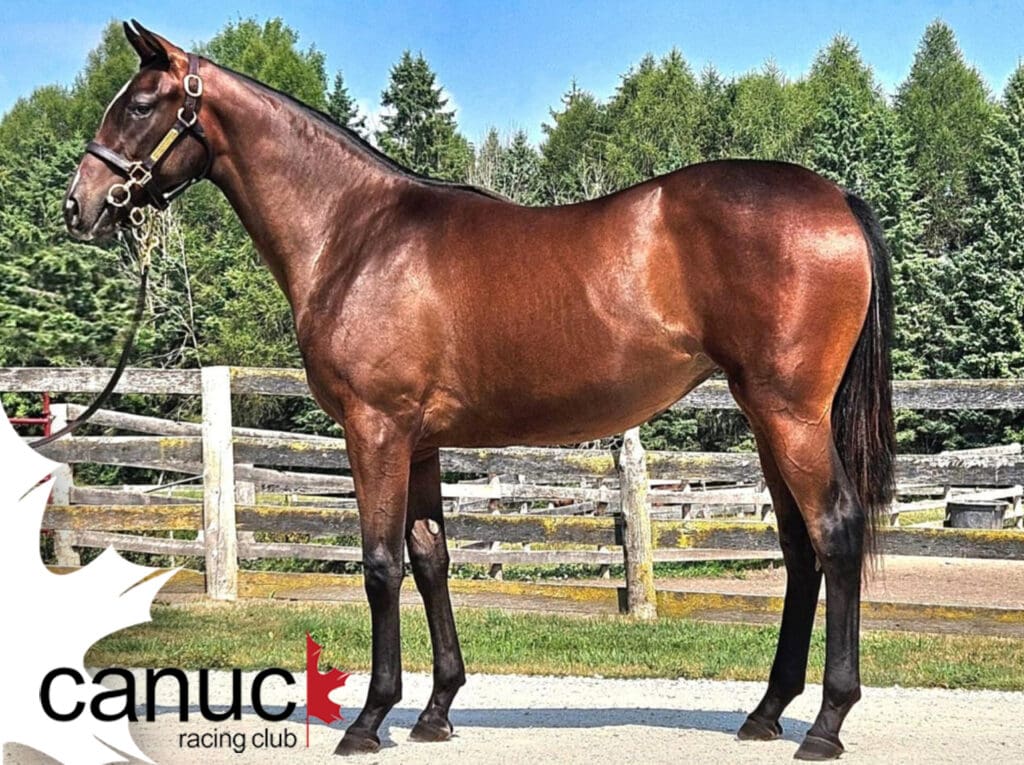
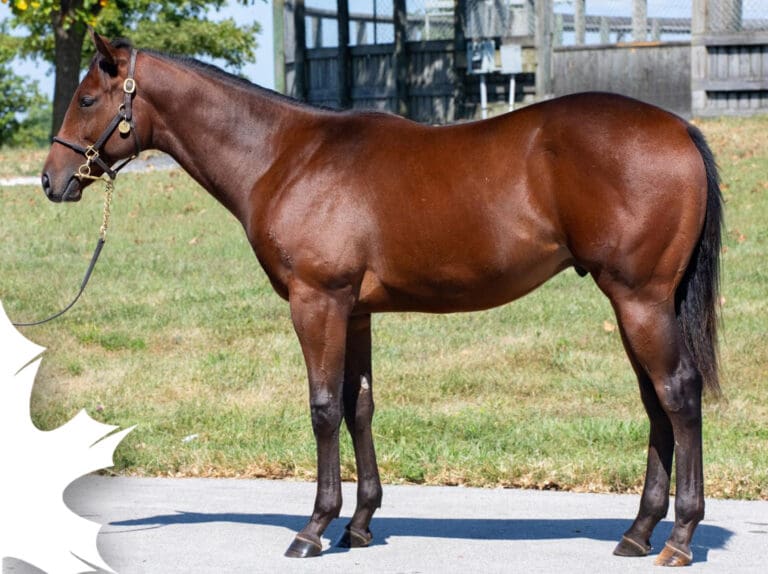
- Filly, Ontario-bred, foaled April 23, 2024
- By Oscar Performance out of November Tale
- Trainer: Kevin Attard
- Acquired at the 2025 Keeneland September Yearling Sale
Behind the name
In Canada, stories of witches were never confined to campfires. Overlapping superstition and statute, Canada’s witchcraft law was enacted in the late 1800s and remained relatively unchanged for a century.
The Canadian government only formally repealed prohibition against witchcraft in 2018.
Until that time, Section 365 of the Canadian Criminal Code made it an offence to practice witchcraft, to claim occult powers to find lost or stolen things, and to tell fortunes for money.
But the roots run deeper. Long before Confederation, fear and superstition carried deadly consequences. Daniel Vuil was executed in Quebec City for witchcraft and causing the demonic possession of a young servant girl – visions, flying objects, and unexplained disturbances fuelling a narrative that ended in a firing squad.
By 1763, the line between crime and myth blurred further with the story of Marie-Josephte Corriveau. Executed for the murder of her abusive husband, she was posthumously branded a witch and became one of Quebec’s enduring dark legends. Her body, displayed in an iron cage at a crossroads for weeks, became a haunting symbol of fear and fascination.
Unearthed by gravediggers, La Corriveau’s cage would later tour as a macabre artifact, eventually landing in New York where it was purchased by P.T. Barnum and displayed in his American Museum at Broadway and Ann Street.
Canada never reached the hysteria of Salem, but the fear was real – as were the consequences.
In 1818 New Brunswick, a witch trial accused 90-year-old woman Mary Tennant of causing inexplicable misfortune: apples withering, fences falling over – even dinners burning on stoves. Concluding it must be the work of a witch, Loyalist settlers tasked Bradbury Mills with the hunt. To stop the witch from doing more harm, he melted down silver, shaped a bullet and fired his musket into the air. Yet Mills soon discovered incontestable proof that the witch was still alive and seeking vengeance: his prized oxen had turned to face the back of their stalls!
Fingers pointed at Mary Tennant and a trial by fire ensured. Local farmers drew a red chalk circle around the accused, tossed a horseshoe into her fireplace, held hands, and slowly read from the Bible – certain that a witch would become as hot as the horseshoe and be driven away.
Remarkably, the modern era was no exception.
In 1919, charges of witchcraft in Huron County went all the way to the Ontario Supreme Court.
Known as the “Seeress of Blyth”, Maggie Pollock had a vision of an airplane and a car many years before either was invented. Claiming her gift was natural and God-given, Maggie did her best to help neighbours find lost items. When called upon to corroborate Maggie’s legitimacy at trial, a neighbour who had frantically searched for a lost diamond ring testified that Maggie’s deceased mother revealed that she had thrown it out with some dust. Assurances were given that the ring would be found as soon as the snow melted. Sure enough, it was.
The Toronto Saturday Night – Canada’s oldest general interest magazine (1887 – 2005) chastised prosecutors and judges who ordered Maggie to stop claiming supernatural powers but allowed her to continue helping those from as far away as Florida and California. After the trial, even the local police enlisted Maggie several times to locate missing people.
In 2018, a fortune teller from Milton, Ontario became the last person ever charged under Canada’s witchcraft law.
Just two days before Section 365 was repealed, Tiffany Butch, known as the “White Witch of the North”, swindled $60,000 by convincing a man that the only way to rid his house of evil spirits was to sell it and transfer the proceeds into her account.
So ended a long, strange chapter in Canadian history – where the unseen carried weight and those who claimed to understand it often held power.
Today, the fascination lives on – less in law, more in legend.
In modern mythology, a Witcheress is a female Witcher, a disciplined monster hunter who tracks what others can’t see, remains composed under pressure, ignores the drama, brings a sharp edge, and finishes the job. A closer.
About the Sire
A son of champion turf sire Kitten’s Joy (9-4-0 in 14 starts, $2,075,791), Oscar Performance was a top-class turf performer whose combination of speed and stamina established him as one of the leading turf horses of his generation.
Able to control races on the front end and consistently deliver high-level performances against elite competition, Oscar Performance became a multiple Grade 1 winner who earned more than $2.3 million in his 15 starts (8-1-1) while registering 3-digit eSpeeds in nine of them. His victories included the $1 million Breeders’ Cup Juvenile Turf, the $1.2 million Belmont Derby Invitational, the Secretariat Stakes, and the $800,000 G1 Woodbine Mile Stakes.
Ranked high among top turf sires in 2024 and 2025 – specifically as a leader among fourth-crop sires by graded stakes winners – Oscar Performance has sired five crops of racing age with 387 foals, 9 black-type winners, and 130 winners of 326+ races who have earned more than $15 million.
Demonstrating versatility across distances and surfaces, his progeny include G1 Belmont Derby Invitational winner Trikari ($1,418,705), G1 Saratoga Derby Invitational winner World Beater ($1,126,414), G2 winners Red Carpet Ready ($799,175), Andthewinneris ($517,732) and Storm’s Wake ($462,000), as well G3 winners Tumbarumba ($3.4+ million) and Endlessly ($796,700).
About the Dam
November Tale is an Irish-bred dam who has produced three other registered foals in addition to Witcheress. One, Novel, has won three starts between Woodbine and Century Downs in Alberta.
November Tale was sired by Ireland’s Casamento, a G1 winner who earned $423,742 going 4-1-0 in eight races. Her sire’s sire was Kentucky-bred Shamardal who earned $1,931,770 in his seven attempts (6-0-0).
November Tale is one of six foals out of Irish-bred dam Skeleton. Five were winners, including November Tale who earned a first at Dundalk in Ireland)and a second place at Golden Gate in California. The family tree of the dam’s side includes Irish-bred G1 winner and millionaire Tobougg who was sired by Barathea, another millionaire who won the Breeders’ Cup Mile.